Home > Homemade Dog Food Recipes » Foods for Adult Dogs > Homemade Recipe for an Adult Labrador Retriever with Accessory Pathway Arrhythmia
Homemade Recipe for an Adult Labrador Retriever with Accessory Pathway Arrhythmia
Posted by Dr Sam, On 20 Jul, 2026 | Updated On 20 Jul, 2026 No Comments »
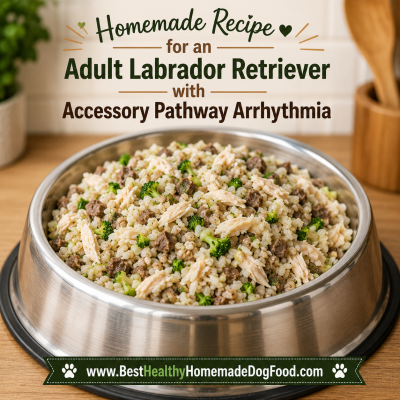
Irregular Heartbeat in Your Adult Lab? This Low-Sodium, Magnesium-Rich Recipe Supports Cardiac Rhythm Stability
Recipe Summary
| Category | Details |
| Breed | Labrador Retriever |
| Predisposed Diseases | Obesity (60 to 70% overweight; worsens cardiac workload), Hip Dysplasia, Elbow Dysplasia, Osteoarthritis, Cranial Cruciate Ligament Rupture, Exercise-Induced Collapse (EIC) , Gastric Dilatation-Volvulus (Bloat) , Diabetes, Hypothyroidism, Cataracts, Progressive Retinal Atrophy (PRA) , Tricuspid Valve Dysplasia (congenital heart defect common in Labs), Dilated Cardiomyopathy (DCM) – Labs are a predisposed breed, Laryngeal Paralysis |
| Current Health Condition | Accessory pathway arrhythmia – An abnormal electrical connection in the heart creating a “shortcut” for electrical signals, causing episodes of rapid heart rate (tachycardia). This is often associated with Wolff-Parkinson-White (WPW) syndrome in humans; in dogs, it can be congenital or acquired. Critical dietary focus: Low Sodium (reduces cardiac workload and fluid retention), Magnesium (essential for stabilizing cardiac cell membranes and regulating sodium/potassium transport), Taurine (critical for heart muscle function – Labs have restricted taurine synthesis), L-Carnitine (supports cardiac energy metabolism), Moderate Protein (prevents muscle wasting while protecting kidneys), Healthy Fats (omega-3s reduce inflammation and arrhythmia risk) |
| Life-Stage | Non-reproductive Adult (2 – 7 years; peak athletic/working years for Labs) |
| Carb Source | White rice and Small amount of pearled barley – White rice is gentle, low-sodium, and highly digestible; barley adds soluble fiber for weight management (critical for Labs) without triggering arrhythmias |
| Protein Source | Lean skinless chicken breast and Small amount of beef liver – Chicken is lowest-sodium fresh meat and provides high-quality protein for muscle maintenance; small amount of liver (2 – 3% of total protein) provides natural taurine, CoQ10, and B vitamins for heart health |
| Fat/Oil | Cold-pressed salmon oil – EPA/DHA reduce cardiac inflammation, lower triglycerides, and stabilize arrhythmia risk; also supports coat and joint health |
| Vegetables | Steamed broccoli and Pureed pumpkin – Broccoli provides magnesium (critical for rhythm stability) and sulforaphane (anti-inflammatory); pumpkin adds potassium and soluble fiber for weight management |
| Natural Supplements | Eggshell powder – Pure calcium without excess phosphorus (protects kidneys); critical for Ca:P balance in heart patients. Magnesium glycinate – Most absorbable form; directly supports cardiac rhythm. Taurine powder – Essential for Labradors; prevents taurine-deficiency DCM. L-Carnitine – Supports cardiac energy metabolism. Coenzyme Q10 (optional) – Antioxidant for heart muscle energy. Hawthorn berry (optional – consult vet) – Mild vasodilator; may support cardiac function |
Step-by-Step Preparation Directions
Ingredients:
| Ingredient | Amount | Purpose |
| Lean skinless chicken breast | 600g (1.3 lbs) | Low-sodium protein |
| Beef liver | 50g (1.7 oz) | Natural taurine, CoQ10, B vitamins |
| White rice (uncooked) | 150g (¾ cup) | Gentle carb, low-sodium |
| Pearled barley (uncooked) | 50g (¼ cup) | Soluble fiber, sustained energy |
| Broccoli florets | 120g (1 cup) | Magnesium, antioxidants |
| Pumpkin puree | 100g (½ cup) | Potassium, soluble fiber |
| Salmon oil | 2 tbsp | Omega-3s for cardiac health |
| Eggshell powder | 1½ tsp | Calcium (pure, no phosphorus) |
| Magnesium glycinate | 150mg elemental Mg | Rhythm stabilization |
| Taurine powder | 1000mg | Heart muscle function |
| L-Carnitine | 250mg | Cardiac energy metabolism |
Optional: Coenzyme Q10 (30mg/kg body weight daily) – consult veterinarian before adding.
Eggshell powder preparation (make ahead):
- Save shells from 8 to 10 pastured eggs. Rinse thoroughly.
- Boil shells for 5 minutes to sanitize.
- Dry in 200°F (95°C) oven for 10 to 15 minutes until completely dry.
- Grind to fine powder in a clean coffee grinder or high-speed blender.
- Store in airtight jar. 1 level teaspoon is approximately 2,000 mg calcium (elemental).
See details on how to make eggshell powder yourself.
Step-by-step:
- Cook rice and barley together: In a medium pot, combine white rice, pearled barley, and 2½ cups water. Bring to a boil, then reduce heat to low, cover, and simmer for 20 to 25 minutes until tender. Do not add salt. Set aside.
- Cook chicken and liver:
- In a large skillet over medium heat, poach chicken breast in ½ cup water (no oil needed). Cover and cook 12 to 15 minutes until fully cooked.
- In the last 3 to 4 minutes, add finely chopped beef liver to the skillet and cook until just browned.
- Remove chicken and liver. Shred chicken into small, bite-sized pieces. Finely chop liver.
- Steam broccoli: Steam broccoli florets for 5 to 6 minutes until bright green and tender. Finely chop (small pieces are easier to hide in rice).
- Combine base: In a very large bowl, mix cooked rice-barley mixture, shredded chicken, chopped liver, broccoli, and pumpkin puree. Stir thoroughly.
- Add salmon oil: Drizzle salmon oil over the mixture and mix well. Omega-3s are heat-sensitive – add after cooking.
- Add dry supplements: Sprinkle eggshell powder, magnesium glycinate, taurine powder, and L-carnitine. Mix thoroughly. Even distribution is critical for cardiac support.
- Cool completely to room temperature before serving or storing.
Nutritionist Safety Note
Understanding Accessory Pathway Arrhythmia:
Magnesium deficiency is directly linked to heart arrhythmias in dogs. Accessory pathway arrhythmia occurs when an abnormal electrical connection creates a shortcut for electrical signals in the heart. This causes episodes of tachycardia (rapid heart rate) that can be triggered by exercise, excitement, or stress.
Magnesium is the cornerstone mineral for rhythm stability – it facilitates the transport of sodium and potassium across cardiac cell membranes. Without adequate magnesium, electrical signals become unstable, and arrhythmias worsen. This recipe provides 150mg elemental magnesium from magnesium glycinate (the most absorbable form) per batch.
Sodium Restriction – Non-Negotiable:
For a dog with any heart condition (including arrhythmia), sodium is the enemy. Excess sodium increases blood volume, forcing the heart to work harder. The maximum is 6mg of sodium per pound of body weight daily. For a 65 – 80 lbs. adult Lab, that’s roughly 390 – 480mg sodium TOTAL per day.
This recipe contains effectively 0mg added sodium – no salt, no salted broths, no processed ingredients.
Foods to avoid completely:
- Cured meats, deli meat, hot dogs, sausage, beef jerky
- Canned vegetables (unless salt-free)
- Peanut butter (high in sodium in many brands)
- Salted nuts, chips, pickles, olives
- Any table scraps from human meals
- Commercial treats high in sodium (check labels)
Calcium-Phosphorus Balance for Cardiac Rhythm:
Calcium also influences the maintenance of proper nerve conduction processes and the rhythmic functioning of the heart. The ideal Ca:P ratio for dogs is approximately 1.2:1. This recipe uses eggshell powder (Ca 38%, P < 1%) to achieve this ratio without adding harmful phosphorus.
Taurine – Critical for Labradors:
French Bulldogs have restricted taurine synthesis compared to standard breeds – Labs may also be at risk, especially when fed diets lacking adequate methionine and cysteine (precursors to taurine). Taurine deficiency is a known cause of secondary DCM, which can worsen existing arrhythmias.
This recipe provides 1000mg taurine per batch. Monitor serum taurine levels (target: whole blood > 250 nmol/L) every 6 months if on a homemade diet long-term.
The Grain-Free and DCM Warning – Critical for Labs:
The FDA has identified Labrador Retrievers as one of the most frequently reported breeds in diet-associated DCM cases. The common thread? Grain-free diets high in legumes (peas, lentils, chickpeas) and/or potatoes.
This recipe intentionally uses white rice and barley – grains that have NOT been linked to DCM. Do not substitute with legumes or potatoes.
Weight Management for Cardiac Health:
Labrador Retrievers are prone to obesity (60 – 70% overweight), and excess weight is devastating for cardiac health:
- Increases cardiac workload
- Worsens arrhythmia frequency
- Raises blood pressure
- Increases inflammation
This recipe uses lean chicken and controlled grains to maintain a healthy weight. Monitor body condition weekly – you should be able to feel ribs with light pressure.
Therapeutic Break:
Taurine, L-carnitine, and magnesium should be used continuously for cardiac conditions – no “break” is needed. However, if your dog is on prescription heart medications (e.g., beta-blockers, digoxin, diltiazem, pimobendan), consult your veterinarian before adding magnesium supplements or hawthorn berry, as interactions can occur.
Hawthorn berry is optional and should ONLY be added under veterinary supervision – it can enhance or interfere with cardiac medications.
Calorie note: This batch is 2100 kcal total. A healthy adult Labrador Retriever (65 – 80 lbs. / 29 – 36 kg) typically needs 900 to 1,300 kcal per day depending on activity. Do not feed the whole batch in one day. Use the feeding guide below.
Before starting: Consult your veterinarian for:
- Cardiology workup – ECG, Holter monitor, echocardiogram to assess the severity of the arrhythmia
- Serum taurine and NT-proBNP testing – establish baseline values
- Bloodwork – kidney values, electrolytes (especially magnesium and potassium), thyroid function
- Body condition scoring – confirm ideal weight for cardiac health
- Medication review – if on cardiac drugs, discuss supplement interactions
Total Calories (Batch): 2100 kcal
Calculated from:
- Chicken breast (660 kcal)
- Beef liver (65 kcal)
- White rice (525 kcal)
- Pearled barley (175 kcal)
- Broccoli (40 kcal)
- Pumpkin puree (35 kcal)
- Salmon oil (240 kcal)
- Supplements (negligible)
Feeding Instruction
Know your dog daily energy requirement (DER) and feed accordingly. If you need to check your dog’s DER, use the free DER calculator here.
For general feeding guide, divide total batch into daily portions based on puppy’s weight and age as given in the table below:
| Ideal Lean Weight | Daily Amount | Calories/Day | Meals/Day | Activity Level |
| 55 – 65 lbs. (25 – 29 kg) – small female | 650 – 750g (31 – 36% of batch) | 878 – 1,013 kcal | 2 – 3 meals | Low-moderate |
| 65 – 75 lbs. (29 – 34 kg) – average Lab | 750 – 850g (36 – 40% of batch) | 1,013 – 1,148 kcal | 2 – 3 meals | Moderate |
| 75 – 85 lbs (34 – 39 kg) – large male | 850 – 950g (40 – 45% of batch) | 1,148 – 1,283 kcal | 2 – 3 meals | Moderate-active |
Feeding schedule for arrhythmia management:
- Smaller, more frequent meals (3 meals/day vs 2) to prevent blood sugar swings that can trigger arrhythmias
- Feed at consistent times daily – irregular feeding stresses the body
- Never feed within 1 hour of exercise or excitement
- Add 2 – 3 tbsp of warm water to each meal (hydration is critical for electrolyte balance)
Body condition monitoring (weekly):
- Ideal: Ribs easily felt with light pressure; visible waist; abdominal tuck
- Overweight: Ribs difficult to feel; no waist – reduce portions by 15% (critical for cardiac health)
Exercise guidance for arrhythmia:
- Avoid high-intensity exercise (fetch, sprinting, agility)
- Provide moderate, steady-state exercise (leash walks, swimming)
- Monitor for signs of arrhythmia during exercise: weakness, stumbling, collapse, heavy panting
- If any symptoms occur, stop activity immediately and consult your veterinarian
Storage Instructions
| Duration | Method |
| Up to 3 days | Airtight glass container in refrigerator (salmon oil reduces shelf life) |
| Up to 2 months | Portion into daily servings in freezer-safe containers, label with date |
Reheating: Thaw frozen portions in refrigerator overnight. Warm gently by placing container in warm water until just above room temperature. Never microwave – destroys omega-3s and can create hot spots. Never serve hot – heat increases heart rate temporarily and can trigger arrhythmia episodes.
Time Estimates
- Prep time: 15 minutes
- Cooking time: 25 minutes
- Total time: 40 minutes
Please Share with Your Friends/Followers


Do you have question or opinion about this post? Make it in the comment below.
Cook for Your Dog, Care for Your Dog, Subscribe Today!
Related Homemade Dog Recipes

Previous Recipe: « Brachycephalic Growth & Joint Protection – French Bulldog Puppy Recipe (No Stones, No BOAS Triggers)
Next Recipe:
- This Homemade Dog Recipe is Tagged with:
- Accessory pathway arrhythmia |
- beef liver |
- broccoli |
- chicken |
- Eggshell Powder |
- L-Carnitine |
- Labrador Retriever |
- Magnesium glycinate |
- pearled barley |
- Pureed pumpkin |
- salmon oil |
- Taurine powder |
- White rice
Leave a Reply